

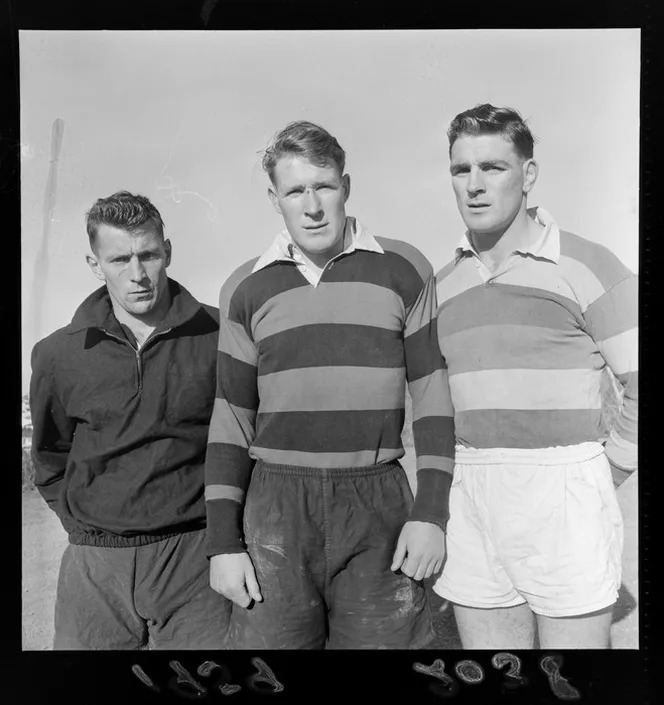
My vintage rugby shirts are the most well-made garments I own. The thick heavyweight fabric design to withstand the Hulk-like grips of opposing team members. The shirt is bright, with blue stripes, green ones, orange, purple, pink, and red, (for obscuring grass stains).
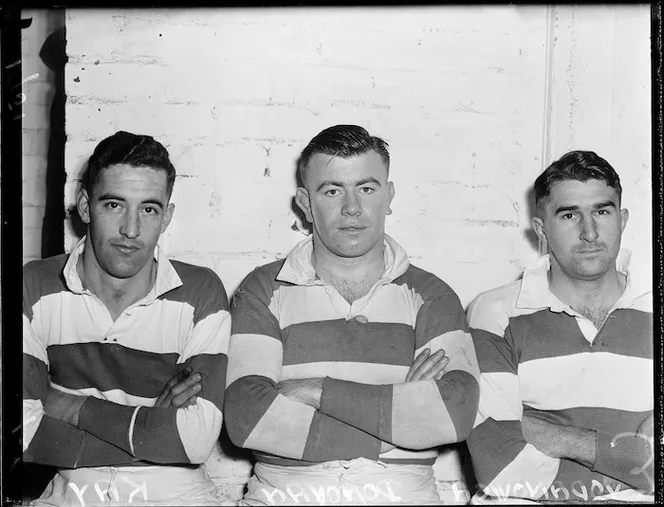
Its proportion is wide and long, it can be layered over a shirt or worn on its own. The bands of elastic at the cuffs grip my wrists like sweatbands, not too tight, but just so. The white rubber button, sewn into a strip of grosgrain on the inside of the collar (meant to hold fast), brings to mind the organized chaos of a scrum.
I was asked not long ago if my vintage Canterbury rugby shirt was by Martine Rose, the popular British designer who is known to incorporate sports jerseys into most of her collections.
Rugby shirts—for the most part a timeless menswear staple—are having yet another moment. There is no shortage of players right now. The rugby shirt is a close cousin to the polo shirt, but usually differentiated by a thicker collar, a rubber button, and wide, horizontal stripes. Green, white, and orange for the Australian Wallabies. Red and white for England. Baby blue and white for Argentina.
The potential stripe arrangements and widths—or “hoops” in rugby terms—are infinite. It’s British artist David Hockney’s shirt of choice—his personal style pairing playfully with his work. The colorful, segmented landscape in his Pacific Coast Highway and Santa Monica, for example.

Folklore has it that rugby was first invented in England in 1823. It’s seen many permutations since, and is now split into two leagues and two governing bodies, the Rugby Union under World Rugby, and the Rugby League under the Rugby League International Federation. There are the avid fans, the traditions, the institutional racism—like all other major sports organizations. But rugby is a game more brutal than football or hockey. There is next to no protective gear. Not even a shin pad or helmet for Virgil Abloh to accessorize on the Off-White runway.
Some quirks: according to the rules, you can only pass the ball backwards. A goal is a humble “try.” Music—not your average chant, think fans singing 18th century verses by Romantic poet William Blake in unison—is at the heart of the game. It’s logical that such an idiosyncratic game would have such a memorable uniform.

Sometimes when you love a garment so much and it starts trending, you’re faced with the feeling that you need to let it go. It used to mean standing out, but now, will it equal fitting in? Does it matter? A rugby shirt is the best garment to do both—stand out, and fit in. Teamwork may be central to the sport, but the stripes of its uniform are used to individualize. They set neighboring clubs apart, providing their own ID while symbolizing lifelong unity with one’s crew, a sense of belonging.

Among the most significant events in sports history is Nelson Mandela’s choice to wear a Springboks rugby jersey to attend the 1995 Rugby World Cup finals in South Africa, a landmark gesture credited for playing a major role in uniting the country after the darkest days of Apartheid. A rugby shirt says a lot, but nothing more so, maybe, than resilience. Few garments today are built as tough.